
In Greek mythology, Achilles was made invincible as a baby when Thetis, his mother, dipped him in the River Styx. Achilles was invincible everywhere except for his heel where Thetis held onto him. During the Trojan War, the attack on Achilles came when he was killed by an arrow shot into his heel, the only vulnerable part of his body. Thus came the designation in anatomy today as the Achilles tendon.
My own attack on Achilles came when I tore my Achilles tendon while snowshoeing. The injury completely wiped out snowshoeing for two seasons. However, I would think getting shot in the heel by an arrow would be much worse.
According to Mayo Clinic, the Achilles tendon is a strong cord that connects the muscles in the back of the calf to the heel bone. If stretched too far, the tendon can tear partially or completely. An injury can cause sharp pain in the back of the ankle and lower leg and affect the ability to walk properly.
When the Injury Happened
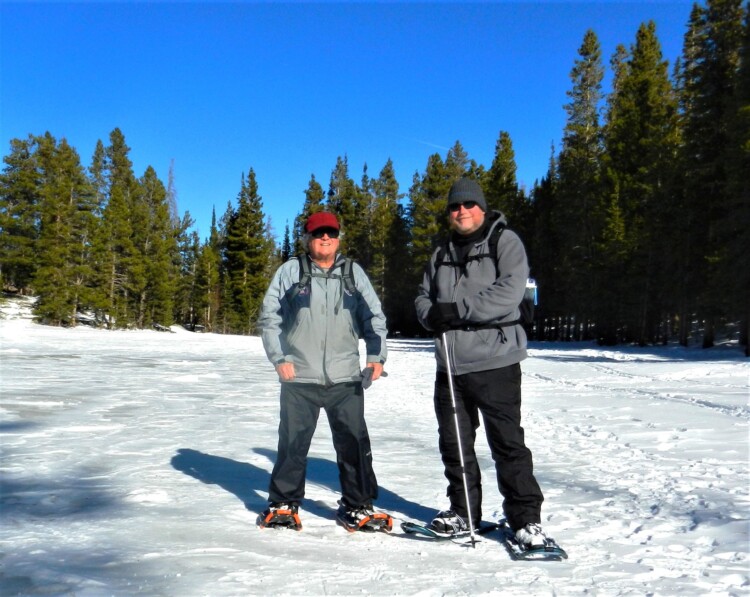
On an early January snowshoe outing with a friend in Colorado’s Rocky Mountain National Park (RMNP), we decided to go off-trail at Bear Lake. We found a path previously broken that went upward at a 35-to-45-degree angle. As we were making our way up the incline, I felt a sharp pain in my left ankle. Back at the trailhead, I knew I had injured something.
My appointment with sports medicine showed from an X-ray that I had Achilles tendonitis and a bone spur at the ankle. I was told that continued snowshoeing could lead to an Achilles rupture, so the injury put an end to snowshoeing for that season.
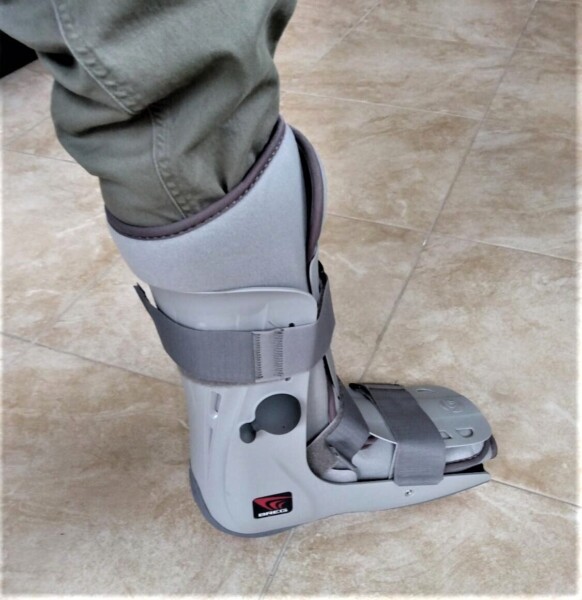
After being fitted with an orthopedic boot and referred to physical therapy for a few months, there was no improvement in my ankle. I was then referred for an MRI that revealed severe Achilles tendinopathy with a 50% tear of the Achilles tendon. The previous X-ray had not revealed the tear.
The MRI confirmed that my injury was serious and that I wouldn’t be snowshoeing again anytime soon.
Read More: Don’t Forget to Stretch — Stretches for Snowshoeing
An Adaptive Snowshoe Idea
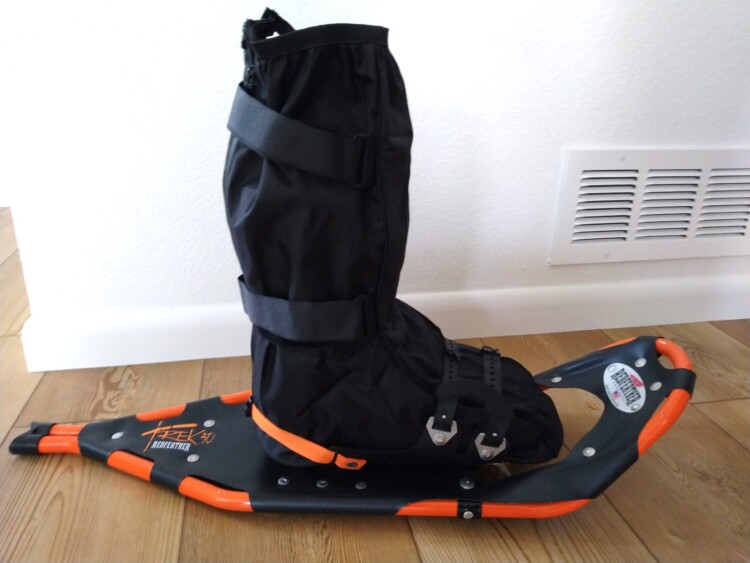
Bound and determined to snowshoe, I purchased a waterproof cover for my huge orthopedic boot, and I modified the boot and cover to fit on my Redfeather snowshoe. It made it to the very last notch on the binding. I was excited to try out my adaptive snowshoe.
In September, I was referred to a foot and ankle surgeon who, after seeing the MRI results, recommended surgery to repair the tear. When I told him of my modified snowshoe plan for the coming season, he put a halt to it. He explained that excessive use of my foot could worsen the tear and make the repair more difficult.
So, I never used my cleverly adaptive snowshoe.
A month later I had surgery to repair my Achilles tendon. After surgery, the doctor assured me that everything went well and I was on the road to recovery, but it would be a long recovery that interrupted my second snowshoeing season.
That was not what I wanted to hear.
Missing snowshoeing for two seasons is like a wine connoisseur not being able to drink a glass of fine wine for two years.
My recovery began with a plastic cast and a knee scooter for mobility for a couple of months, followed by more physical therapy. By February that second season, I was walking normally without ankle pain. My doctor strongly recommended not snowshoeing until mid-March, and only on flat snow surfaces. He said no heavily active snowshoeing for six months.
Another Setback on the Trail
At the end of March, I returned to RMNP with my friend to snowshoe. This time, we stopped at Glacier Gorge Trailhead leading to Alberta Falls and back, a 1.6-mile (2.6-km) round trip. The trail was packed and icy, so we put on our cleats rather than snowshoes.
When we arrived near Alberta Falls, I decided to get a closer look. As I took my first step off the trail with my left foot, it post-holed and stayed there as the rest of my body projected forward. The result was a sharp pain in my ankle.
I said, “Here we go again.”
Fortunately, I was able to get up and walk out using my hiking staff for support. When I got home, I iced my foot and called the doctor.
Read More: Snowshoeing 101 — Techniques for the Beginner
Lessons From My Recovery
I discovered my second injury was not serious. The doctor diagnosed it as a sprain and not another tendon tear. The left ankle pain subsided in due time but not in time to snowshoe again that second season.
In retrospect, I offer a few suggestions to help prevent injuries.
- Do stretching exercises before heading out.
- Learn snowshoeing techniques for ascending, traversing and descending hills.
- Be cautious on steep slopes.
- Pay close attention to terrain and trails to avoid tripping or falling.
- Snowshoe on trails and choose distances that are compatible with your endurance level.
- Carry a first aid kit and consider completing a first aid course.
- Consult a physical therapist regarding strengthening exercises for snowshoeing.
- In the event of an injury, follow up with your healthcare provider.
To miss snowshoeing for two winter seasons due to my injury was incredibly discouraging. However, I was optimistic, and I looked forward to getting back to snowshoeing the following winter season.
And I did.
It was exhilarating to get back into the mountains. Getting back into the mountains on my snowshoes felt like finally enjoying that long-awaited glass of wine.
The recovery had given me time to heal and condition my body before heading back out on my snowshoes during the third season.
Read More: Winter Injury Treatment and First Aid
Leave a Comment