About Jim Joque

Jim Joque is a Midwest writer on snowshoeing and backpacking. As an adjunct to being coordinator of disability services at the University of Wisconsin Stevens Point, he teaches adventure education courses including snowshoeing, camping, backpacking, adventure leadership and Leave No Trace.

ALL POSTS BY THIS AUTHOR:

High Adventure for a Cause

Above the clouds on Rainier

I do not do high adventure. I am more of a low adventure kind of guy doing snowshoeing, hiking, backpacking, quiet-water canoeing and camping whereby my feet are close to the ground or I’m gliding on gentle waters.

I see … Continue reading


Snowshoeing Education 208: The Pack and Snowshoe Experience

winter backpacking

Snowshoeing participation increased by 11.4 percent from 2009 to 2010, according to Outdoor Foundation’s “Outdoor Recreation Participation Topline Report 2011.” Backpacking participation also had an increase of 9.2 percent. Both categories showed significant increases compared to several other outdoor recreation … Continue reading


Snowshoeing Education 205: Snowshoeing is a Community Affair

During the holiday season a large numbers of Americans annually watch Frank Capra’s “It’s A Wonderful Life.”  In this classic movie, George Bailey, played by James Stewart is shown by his guardian angel all the lives he touched and his contributions to the Bedford Falls community. George’s community also came together in the end to help save him and his family’s building-and-loan company. A sense of community was the theme throughout the film.

Continue reading


Snowshoeing Education 204: Clarifying Snowshoeing Values

Why do people snowshoe?  What values do they hold dear to them when it comes to snowshoeing?  Why should we be concerned with values of snowshoers?  In response…there are a myriad of reasons why people snowshoe. They all hold differing values when it comes to winter recreation. And it is of concern, because it tells the snowshoeing industry something about the people who participate in the sport.

Continue reading


Snowshoeing 201: Snowshoeing Pedagogy

749_1

I chuckle when I receive an e-mail from a student that addresses me as “Professor Joque.” I have to admit, I never heard of a professor of snowshoeing before. But since I teach occasional snowshoeing courses as an adjunct adventure educator at a university, I do appreciate the respect my students give me as an instructor of the very popular and healthy sport of snowshoeing.

Continue reading


Thermal Bar

Snowshoeing Education 112: Safety First

Snowshoe Magazine

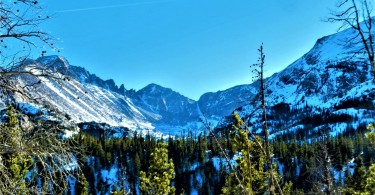
Last year during spring break, my wife Liz and I flew from Wisconsin to Colorado to visit relatives. On a beautiful March morning we drove to Bear Lake. At 9,475 feet above sea level, this scenic haven is located in the Rocky Mountain National Park several miles out of Estes Park. I was chomping at the bit to experience some mountain snowshoeing for the first time, considering I only snowshoe in the Midwest. After a short trek around the lake, Liz decided to go back to the car to take a nap while I ventured off solo on a beautiful winter wonderland trail heading away from the heavily visited area.

Continue reading


eVitamins

Snowshoeing Education 111: The Snowshoe Shuffle, an Indoor Game

231_1

“What kind of traditional snowshoes are slightly oval, offering good maneuverability around objects but lacking good tracking ability? A) Alaskan B) Ojibwa, C) Michigan, D) Bearpaw.” As kids huddle to discuss the question, they finally deliver the answer with confidence and vigor. “It’s D, Bearpaw!” I respond, “Correct; move ahead to your next color.” Obviously, these children are playing a snowshoeing game.

Continue reading


Snowshoeing Education 110: Accessories For the Day Hiker

Snowshoe Magazine

A claim to fame for snowshoeing is that it is considered one of the least expensive outdoor sports, given that all you need are snowshoes. And true, for about $150 you are off and running, or hiking. But like any other recreation, there are always those little extra things you can buy and use that fall under the classification of “accessories.” As I prepare to head out for a day of snowshoeing on a backcountry trail, there are accessories that I take with me. Some of those accessories are for convenience and some are essential to safety.

Continue reading


Snowshoeing Education 109: Leave No Trace When Snowshoeing

188_1

Over the past half century, there has been a significant increase of visitors to our wilderness areas and public lands. According to the National Park Service, area visitors increased from 33 million in 1950 to over 287 million in 2000. Likewise, the Bureau of Land Management and U.S. Forest Service showed a substantial increase in the number of people using designated wilderness areas over nearly four decades; with roughly 4 million in 1964, 7 million in 1974, 15 million in 1984, 21 million in 1994, and nearly 30 million in 2000.

Continue reading


Mountain Safety Research

Snowshoeing Education 108: Compass & Map Reading 101

187_1

I was snowshoeing alone one evening in the Big Eau Pleine Park near Wausau, Wisconsin. This scenic 1,450 acre county park is located on a peninsula that jets out into the Big Eau Pleine Flowage. I began at the trailhead and hiked along the edge of the ski trail. It was in the late afternoon. At a point on the trail, I referenced my compass and decided to go off-trail and head west, since there was not much daylight remaining to finish hiking the entire circle.

Continue reading


Snowshoeing Education 107: I Wish Every Day Was a Saturday

172_1

As a kid, I remember we played in the sandbox during warm weather on Saturday afternoons. And during winter, we played in the snow. We would make a snow fort and have snowball fights. To end the day, we made a magnificent snowman wearing a scarf and hat, carrot for a nose, and coal for its eyes and mouth. How I loved those Saturdays.

Continue reading


Snowshoeing Education 106: Snowshoe Journaling

Snowshoe Magazine

“This was real adventure, snowshoeing into deep winter. And I was relieved that I was getting along so well on my snowshoes. I had read of agonizing cramps from them. But Bill said that was from walking too tensely. So when I grew tired I walked with an extreme loppiness, and that rested me.”

Continue reading


Yukon Charlies Winter Systems

Snowshoeing Education 105: Let the Games Begin

147_1

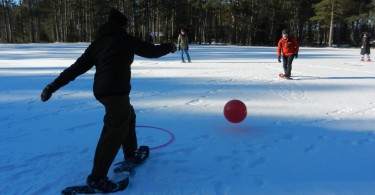
Basketball, volleyball, football or kickball, you name it and it can be played in the snow on snowshoes. All you need is a little creativity and modification to the rules. The bases were loaded and a large orange beach ball was being rolled on a beaten-down path of snow toward the player. It was kicked high in the air. The outfielder tried to catch the fly-ball but fumbled, and in came most of the runners for a streak of homeruns for the team.

Continue reading


ORSSnowshoesDirect.com

Snowshoeing Education 104: Just What Am I to Wear?

Snowshoe Magazine

As a young child in the 50s, I remember my mother putting me into a snowsuit that had pants, coat, and hood all in one piece. It was made of a stiff cotton fabric that froze like a Popsicle on a wet winter day. My arms stuck out straight making me resemble a very short scarecrow.

Continue reading


Snowshoeing Education 103: Using Activities to Perfect Techniques

Snowshoe Magazine

“Alright you guys, I’m going to demonstrate how to step-slide or run down this hill.” I continued by saying, “Plant your weight directly above your shoe, shifting some of your weight slightly to your heels and take big steps as you go down. Be sure to lift your toes so your snowshoes are parallel to the horizon.” Down I went briskly but with tact.

Continue reading


Snowshoeing Education 102: What Do I Want Them to Learn?

Snowshoe Magazine

In any type of training or instruction, a teacher first asks him or herself, “What is it I want my students to learn?” So, they establish an objective that would identify what it is they want students to be able to do when they are finished with training. This would be the learning outcome. The most obvious objective in learning to snowshoe would be for someone to acquire the skill of walking on snowshoes.

Continue reading


ORS Snowshoes Direct

Snowshoeing Education 101

Snowshoe Magazine

Two teams of college students vivaciously run between two suspended hoops on poles, as one member slam-dunks a ball through one of the hoops. The ball is passed to an opposing team member who anxiously waits out of bounds to set that ball in motion once again. And the rush toward the hoop on the other end of the court begins all over. It’s that good old American sport of basketball. But in this game it is played a little differently.

Continue reading