
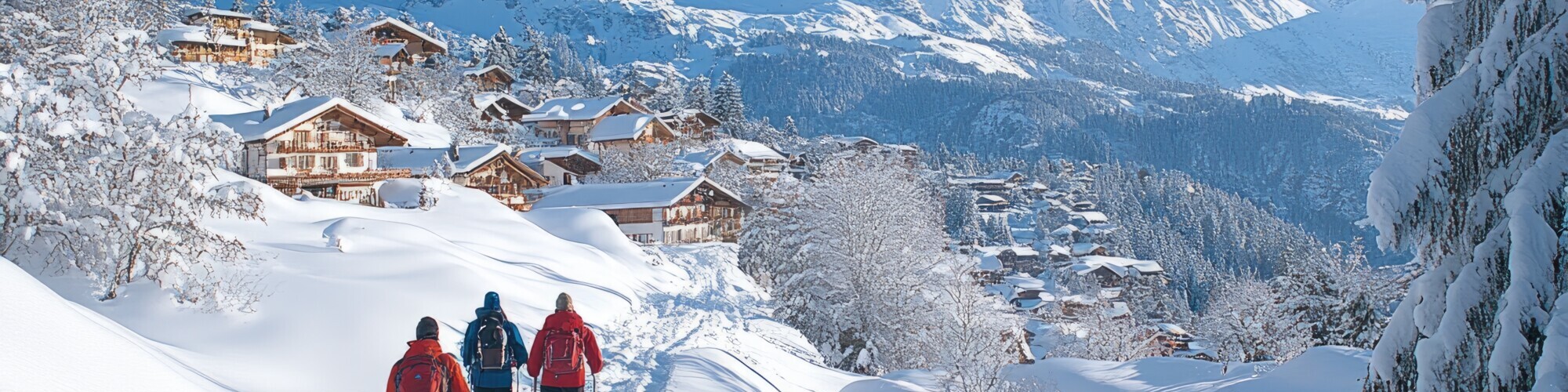
Guided snowshoe trips in Engadine and Puschlav designed for active seniors.
It’s not difficult to find snowshoe tours around Europe, but finding one tailored to seniors is something special. And I just participated in two such trips in the Engadine and Puschlav regions of Switzerland, near the Italian border
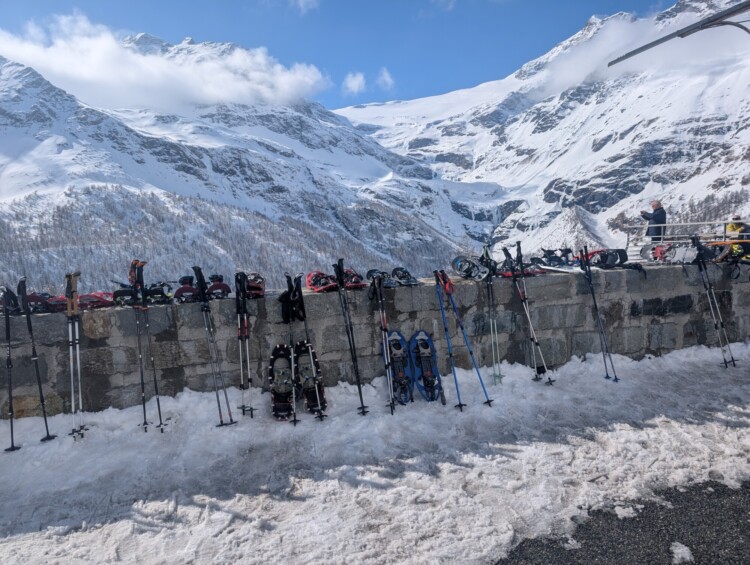
Both trips were sponsored by Pro Senectute, a Swiss organization supporting seniors through a wide range of programs—including hiking, cycling, and snowshoeing trips.
Detailed planning was handled by Sportsgruppe Zimmerberg (SGZ), a regional chapter covering the west shore of Lower Lake Zurich. One of their project manager handled administrative logistics, while another coordinated with local guides to design suitable day trips. The result was an exceptionally well-run experience—everything operated with the precision of a Swiss watch.
Each trip included roughly 40 participants, including about six SGZ-licensed guides. Participants ranged in age from their early 60s to early 80s, with options suited to varying ability levels.
These trips are designed primarily for Swiss residents, and the primary language is Swiss German—though High German is generally sufficient for communication.
These trips are enormously popular, often filling within a day or two of being announced. Interestingly, capacity is not limited by accommodations, but by a strict safety standard: SGZ maintains a ratio of two licensed guides for every 15 hikers. This guideline is especially important for senior groups, ensuring proper support and safety in outdoor conditions.
Snowshoeing in Engadine Valley (Val Müstair)
This year brought another mild winter. Even by late January, the Swiss Plateau was bare, with trees already beginning to bud. But higher in the mountains, there was still plenty of snow to enjoy.
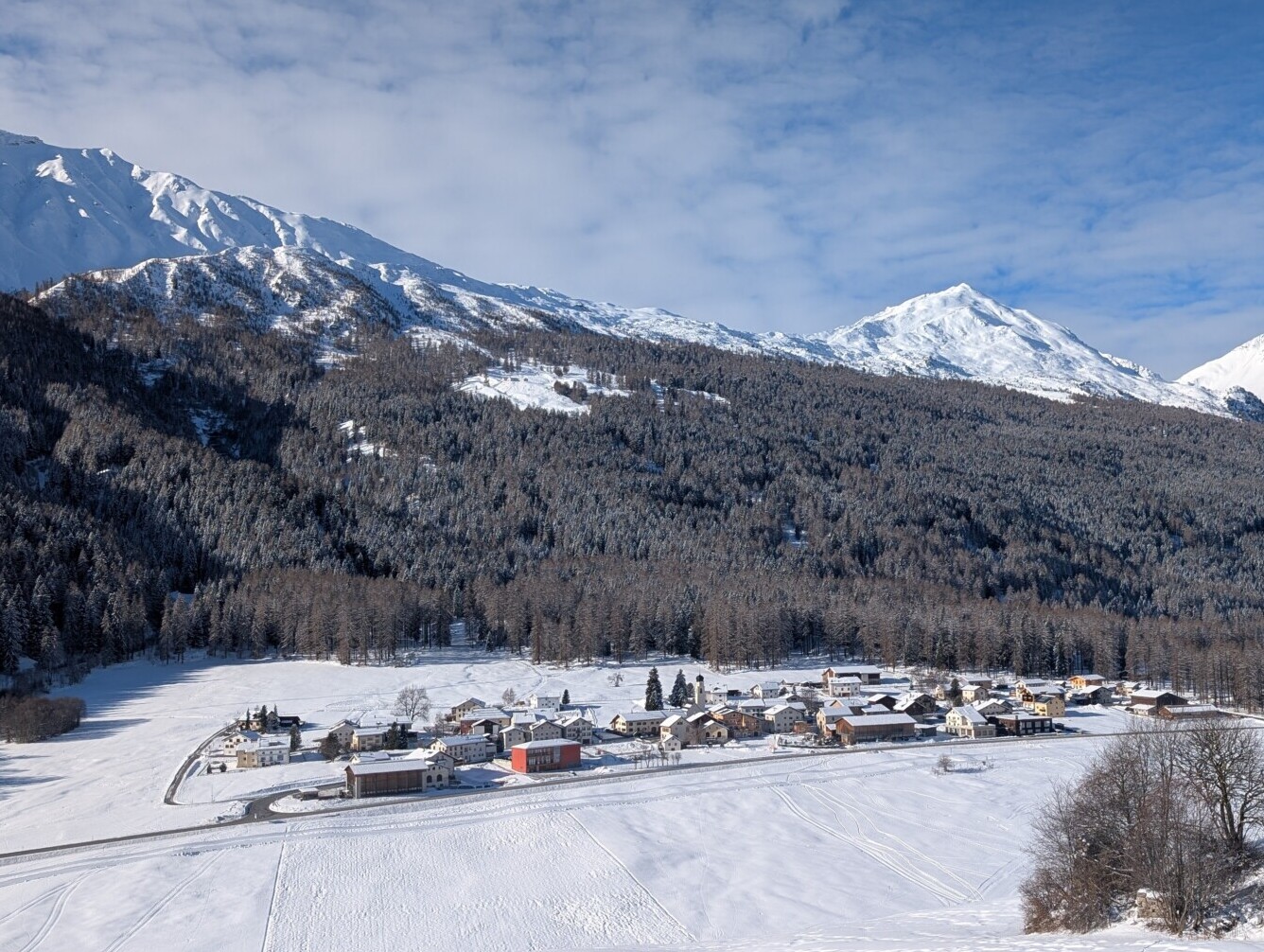
Our first trip took us to Val Müstair, where we stayed in the village of Fuldera (1,638 m). Snow covered the valley, with even deeper conditions in the surrounding mountains. The region was recently designated a UNESCO Biosphere—recognition of its natural beauty and rich biodiversity.
The accommodations at Hotel Staila were excellent. The recently renovated sports hotel offers simple but very comfortable rooms, and each evening featured a five-course dinner that was consistently outstanding.
When I sent photos to my partner Bethli, she replied:
“You told me you were on a sports week, but it’s actually a gourmet week!”
Our charter bus departed the Zurich area at 7:30 a.m., arriving just in time for a light lunch—Gerstensuppee, a traditional Swiss barley soup. From there, we headed out for a short introductory hike, giving guides a chance to assess the group and conduct equipment checks for the week ahead.
The hotel’s commitment to sustainability was evident—even in details like a geothermally heated boot rack.
Most participants were experienced and well-equipped, but the gear checks proved essential in one case. One newcomer made a classic mistake—he brought only blue jeans.
As the saying goes, “cotton kills.” Once wet, it retains moisture, freezes, and can quickly lead to serious discomfort—or worse. A local guide pulled him aside, explained the risks, and directed him to a nearby shop to purchase proper hiking trousers.
Each evening, guides outlined three route options for the following day, and participants signed up based on their preferred level. Routes were carefully selected based on weather, snow conditions—including avalanche risk—and overall scenery.
Options ranged from easy (up to 3 hours, 200–300 m ascent) to more challenging routes (3–5 hours, 300–700 m ascent), requiring a solid level of fitness.
Each morning began with a 7:30 a.m. buffet breakfast. We collected our thermoses—filled overnight with Marschtee (hiking tea)—and packed picnic lunches from a spread of sandwiches, fruit, and snacks.
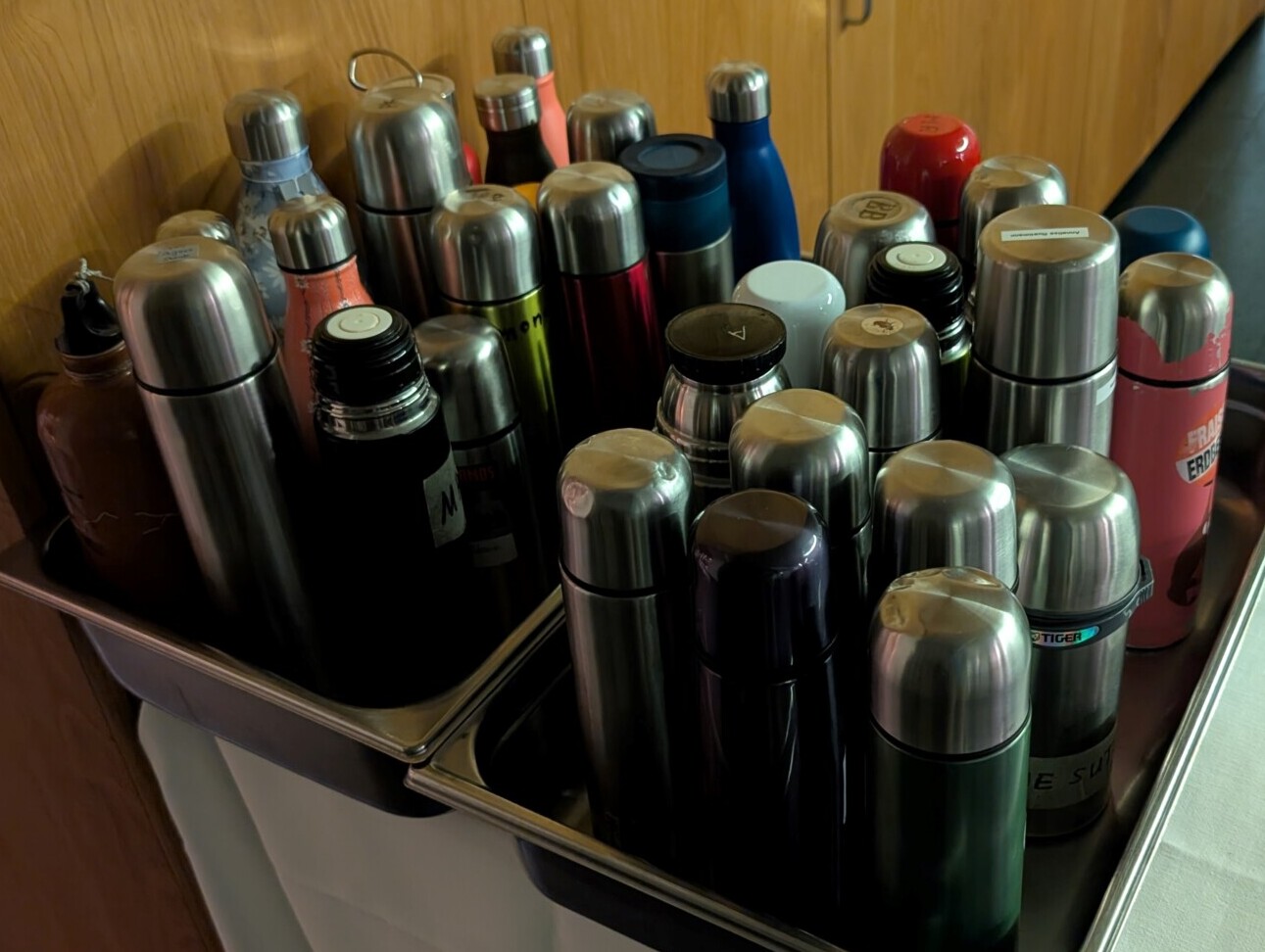
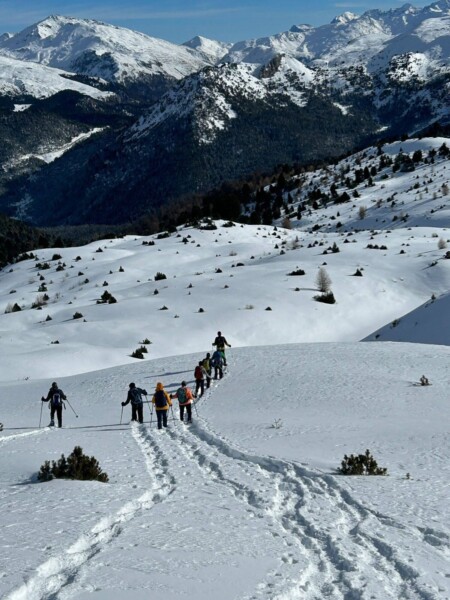
We then boarded a local bus toward the Ofenpass (2,150 m). From there, the group split into smaller teams, each led by a local guide and supported by two Pro Senectute volunteer guides.
They carefully monitored pace and conditions to ensure everyone remained comfortable and safe. While local guides are paid professionals, the PS guides volunteer their time and deserve significant credit for their efforts.
The local guides were led by Severin Hohenegger, a lifelong Fuldera resident and cabinetmaker who spends much of his time guiding tours year-round.
He had a remarkable eye for the landscape, pointing out details we might have missed—like a herd of two dozen Alpine ibex high on the valley slopes.
We were fortunate with the weather, despite frigid mornings (below 0°F). Tuesday brought bright sunshine, while Wednesday delivered steady snowfall with little wind—ideal conditions for a peaceful outing.
By Thursday, fresh powder covered the trails—perfect conditions, and a moment when the expertise of local guides proved especially valuable.
On Thursday, all three groups finished their hikes in the village of Lü (1,920 m), once known as one of the highest municipalities in Europe.
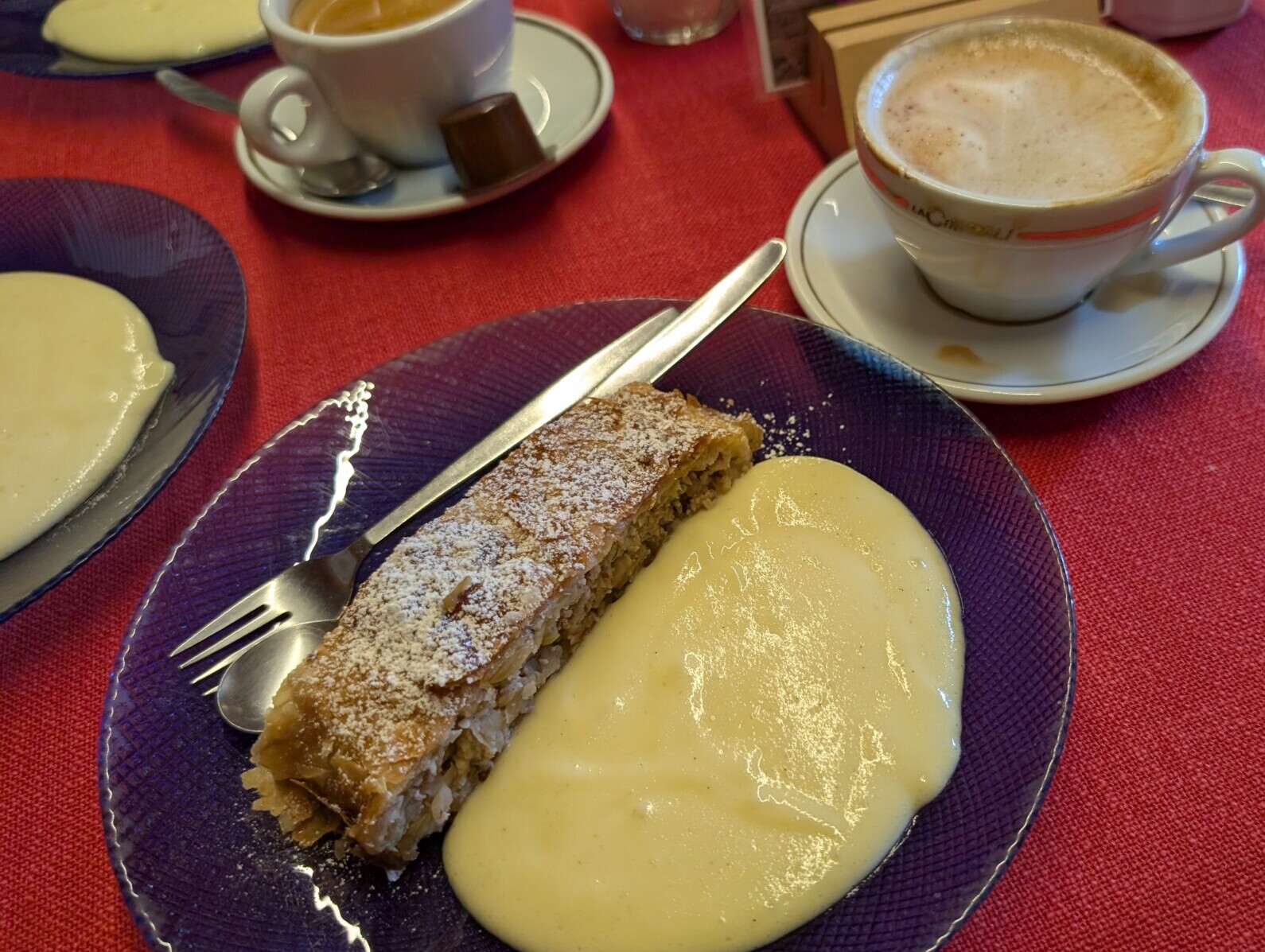
What remains undisputed, however, is that the Gasthaus Hirschen serves some of the finest apple strudel anywhere.
Of course, cost is always a consideration. The trip operates on an all-inclusive fee covering transportation from Zurich, accommodations, meals, and guiding services. From departure to return, the only additional expense is optional gratuities.
My total cost was CHF 1,395 (approximately $1,800 USD) for a single room.
As responsible snowshoers, the only thing we left behind was a small symbol of appreciation for the beauty and hospitality of the Val Müstair region.
Snowshoeing Through Puschlav and the Bernina Pass
The warm spell continued. In Zurich, people were walking around in T-shirts and golf courses were beginning to open—so for snow, we had to head higher into the mountains.
Our trip took us over the Bernina Pass, traveling along the rail line between St. Moritz and Tirano, just across the Swiss border into Italy.
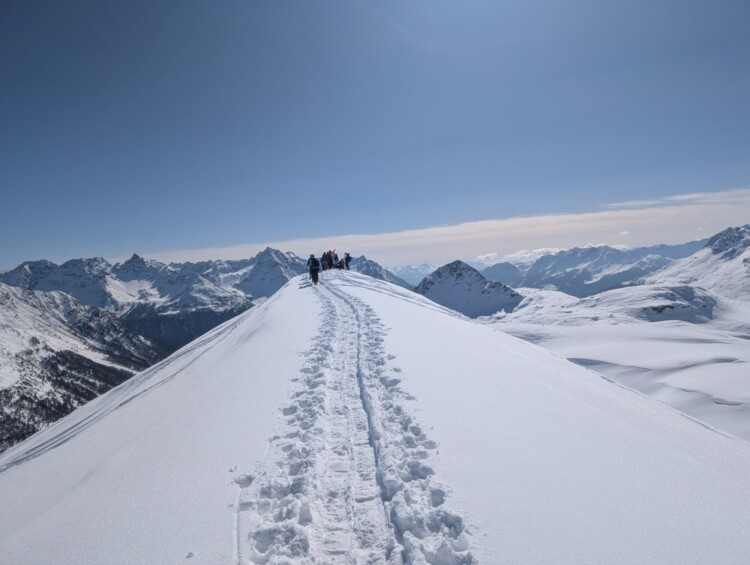
South of the pass lies Puschlav, a culturally distinct region with its own dialect—unfamiliar even to neighboring Engadine residents—though Italian is the most widely spoken language.
Our base was the town of Poschiavo, about 20 km from the Italian border. We stayed at the Albergo Croce Bianca, a newly renovated hotel with a wellness area. The saunas—available to our group at no charge—quickly became a favorite post-hike ritual.
Meals included a buffet breakfast and consistently excellent four-course dinners, and the hotel’s location—just a 10-minute walk to the train station—made daily excursions seamless.
On Monday, we traveled by charter bus from Zurich, arriving in time for a light lunch and a short walking tour of town.
That evening included a welcome reception, dinner, and an overview of the week ahead, along with an introduction to our exceptionally knowledgeable head guide, Romeo Lardi. Each day offered a choice between an easy hike or a moderate route, with optional extensions for those seeking more of a challenge.
Monday brought rain, but overnight skies cleared, giving way to sunshine and comfortable temperatures for the rest of the week. Mornings remained below freezing, while afternoons were warm enough to shed layers.
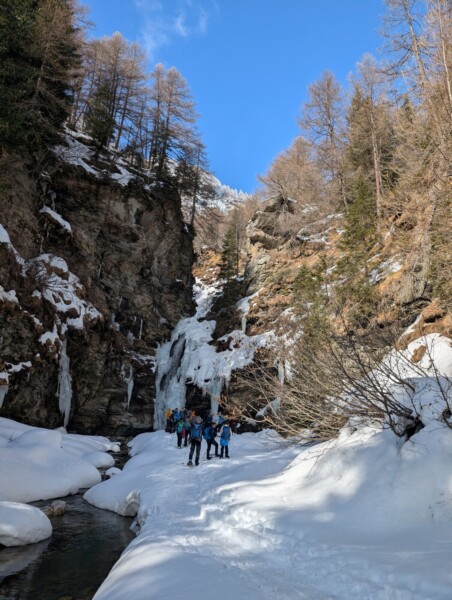
On Tuesday, we took the train north toward the pass, disembarking at Cavaglia (1,692 m), where snow conditions made for an excellent outing. We hiked to a nearby waterfall before ascending 400 meters to the Alp Grüm station (2,091 m).
At the top, we paused for coffee and cake before making our way back to the hotel.
On Wednesday, we again headed north by train—this outing becoming the highlight of the week, both literally and figuratively.
We disembarked at Ospizio Bernina (2,253 m), the highest point along the line between St. Moritz and Tirano. Nearby sits Lake Bianco, uniquely positioned so that its waters drain toward both the Mediterranean and the Black Sea.
Our hike led us up to Motta Bianca (2,560 m) under ideal conditions. Along the way, we passed a group building an igloo before reaching the summit, where panoramic views stretched in every direction.
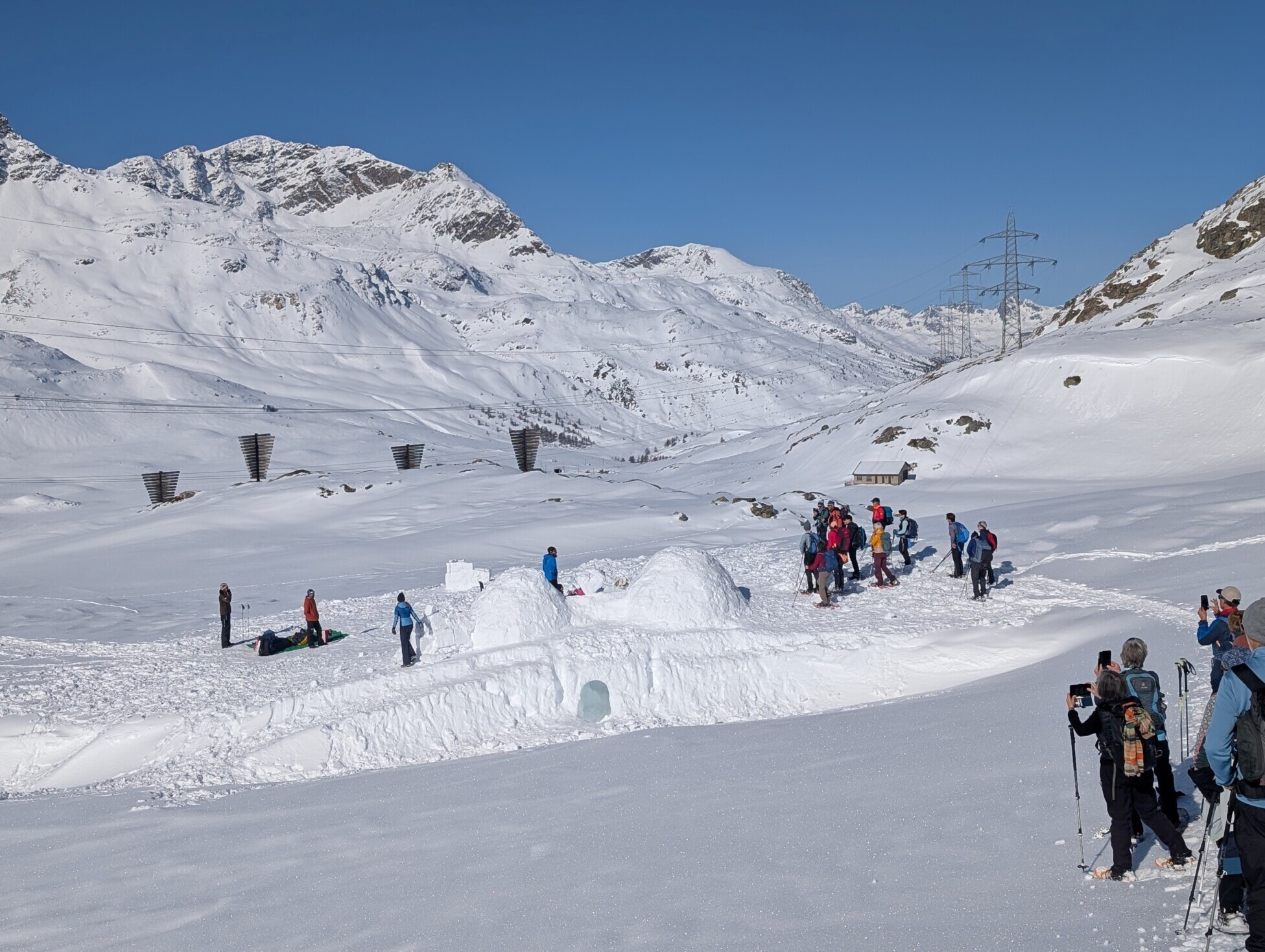
After our descent, we stopped at a restaurant near the station for a quick bite.
Thursday took us in a new direction from Poschiavo—this time by bus. We disembarked at Sfazù (1,643 m) and hiked through meadows and forests, climbing about 400 meters before crossing the frozen Lagh da Saoseo, where we stopped for a picnic lunch.
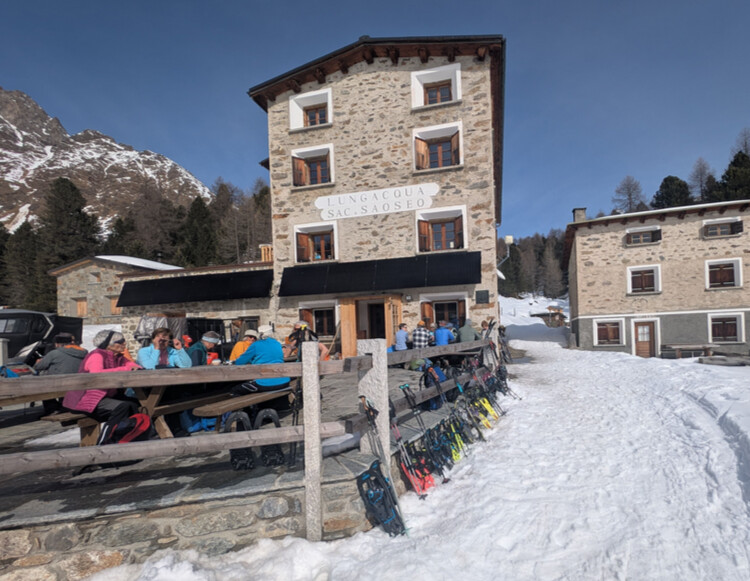
From there, we continued to the Swiss Alpine Club hut at Saoseo/Ristoro Alpe Campo (2,065 m), enjoying freshly baked plum cake before descending back to the bus stop and returning to the hotel.
Friday marked our return to Zurich, but not before one final hike.
We took the train to Bernina Suot (2,052 m), where a gentle route followed the Ova da Bernina River through scenic woodland. After about two hours, we reached Morteratsch, where we shared a final group lunch before boarding our charter bus home—a fitting close to an exceptional week.
Planning Your Own Trip
Has this article sparked your interest in visiting this remarkable corner of Switzerland?
One of the most appealing aspects of these trips is how accessible the region is. Nearly all of the hikes described can be reached via Switzerland’s excellent public transportation system—making it easy to explore without the need to drive.
Of course, it’s entirely possible to recreate a similar experience on your own. The hotels mentioned here are a great starting point, and there are countless others throughout the Engadine and Puschlav regions ready to welcome visitors.
If you’re looking for an English-speaking guide, you may need to look beyond the specific leaders mentioned here. However, local guiding networks are well connected, and both guides and hotels can help point you in the right direction.
Whether traveling solo, with a partner, or as part of a group, this region offers an incredible range of snowshoeing experiences. Even in a low-snow winter, heading into the higher elevations of the Engadine and Puschlav can deliver unforgettable days on the trail.
The adventure doesn’t stop here—explore more snowshoeing in Switzerland!
Read More: Destinations – Switzerland

Leave a Comment